
On October 11th, the IANUS project (EUR, RCL) was represented at the Ethics Conference „Navigating ethical challenges in academia: The role of AI and Trust“ in Vilnius organized by the Office of The Ombudsperson for Academic Ethics and Procedures of the Republic of Lithuania, where key discussions on trust in science and ethical challenges in AI took place. The conference coincided with Global Ethics Day 2024, which embraced the theme “Ethics Empowered,” emphasizing core principles such as autonomy, beneficence, justice, and non-maleficence. Discussions underscored the importance of ethics in contemporary society, particularly in an era where technological advancements challenge traditional notions of trust and responsibility.
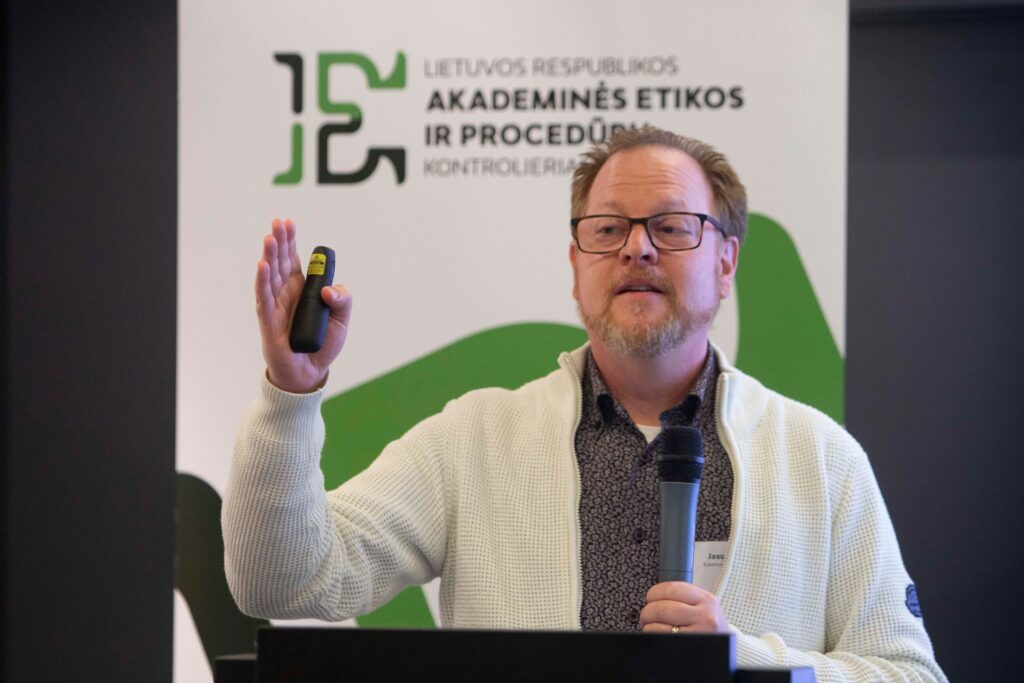
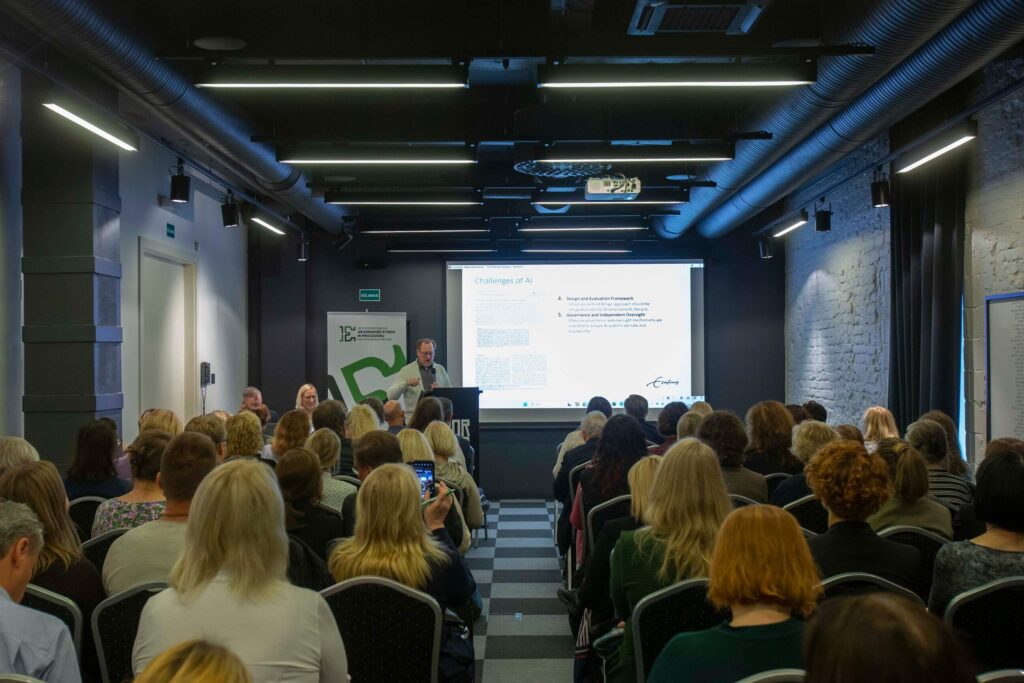
Jason Pridmore, PhD, coordinator of the IANUS, SEISMEC and COALESCE projects at the Erasmus University of Rotterdam, delivered a presentation on the intersection of technology development, social science research, and science communication. He examined how the rapid emergence of AI in education connects with past technological shifts, arguing that while AI brings profound changes, lessons from prior advancements can help navigate its impacts and reestablish trust in education and science.
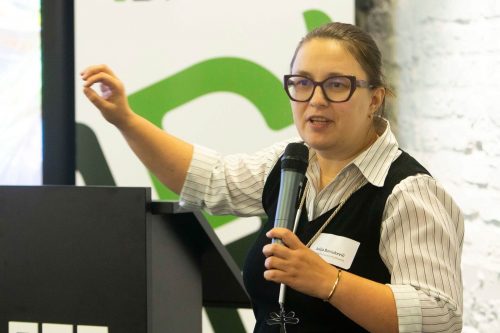
Julija Baniukevič, project coordinator of IANUS project at the Research Council of Lithuania, contributed to discussions on research integrity and collaborative communication. Her talk, titled “Building Bridges of Trust: The Power of Collaborative Communication in Science and Technology,” emphasized the necessity of cross-sector collaboration to ensure transparent, trustworthy scientific communication. Leading both the IANUS and OPUS projects, she highlighted the significance of fostering collaboration among scientists, the public, and communicators to enhance trust in scientific information. In her presentation, she shared insights from an IANUS-organized media panel in Lithuania that explored the reliability of scientific information, personal trust in science, and the evolving role of AI in science communication. The panel structured its discussions into four focus groups—Science Communicators, Science Journalists, Scientists, and Students—to analyze how coordinated efforts can improve public understanding and engagement with science, particularly during times of uncertainty.
The Ethics Conference in Vilnius served as a significant platform for advancing discussions on academic ethics, open science, and AI-driven challenges. By fostering dialogue among researchers, communicators, and policymakers, the event reinforced the need for transparent, ethical scientific practices. IANUS remains committed to developing collaborative approaches that strengthen trust in science and address the ethical implications of emerging technologies. Looking ahead, IANUS will continue engaging with experts and stakeholders to drive meaningful change in the landscape of trust, science communication, and ethical technology governance.